

Carpet and Laminate Underlay Fitting in London
Last reviewed 14 October 2026.
UTK Carpet and Flooring supplies and fits carpet, laminate and acoustic underlay across Greater London from our base in Dagenham, East London. Acoustic underlay adds £2 to £5 per m² to a carpet fitting job, and a standard bedroom with carpet fitting and basic underlay is typically £150 to £300. Every job starts with a free site survey and a fixed quote.
- Rated 5.0 from 27 reviews on our Google Business Profile
- Free technical site survey
- Fixed, written quote before any work starts
- Fitted to BS 5325, the British Standard code of practice for installing textile floor coverings
- Workmanship guarantee on every fit
- Price match against a written quote from another professional installer
Underlay fitting services we offer
We offer comprehensive underlay installation tailored to your specific flooring requirements. Whether you are installing brand-new carpets or upgrading existing floors, our expert team provides five specialized fitting options

Carpet underlay supplied and fitted with your carpet
We supply the underlay, fit it, then fit your carpet over it. This is the usual choice, because carpet makers advise fitting new underlay with every new carpet; Cormar warns that its warranties may be invalidated if new underlay isn’t fitted with a new carpet. See our carpet fitting in London page for the carpet side of the job.
Fitting only, with your own carpet and underlay
Bought your carpet and underlay elsewhere? We fit both on a labour-only basis, from £3 to £6 per m².
Acoustic underlay for flats
High-density acoustic underlay reduces footstep noise reaching the flat below. See the flats section below for how to choose it and what your lease may require.
Stair underlay
Stairs take heavy foot traffic, so underlay is essential there. See the stairs section below, and our stair carpet and runner fitting page.
Laminate and LVT underlay fitting
Laminate needs thin, purpose-made underlay, never carpet underlay, and a flat subfloor underneath it. See the laminate section below, and our LVT and laminate flooring page.
Removing your old floor covering
Removal and disposal of your old floor covering is quoted separately after the survey.
Carpet underlay types
The five main carpet underlay types are PU foam, sponge rubber, crumb rubber, felt and combination. Foam suits most rooms, rubber suits concrete floors and underfloor heating, and felt suits wool carpets.
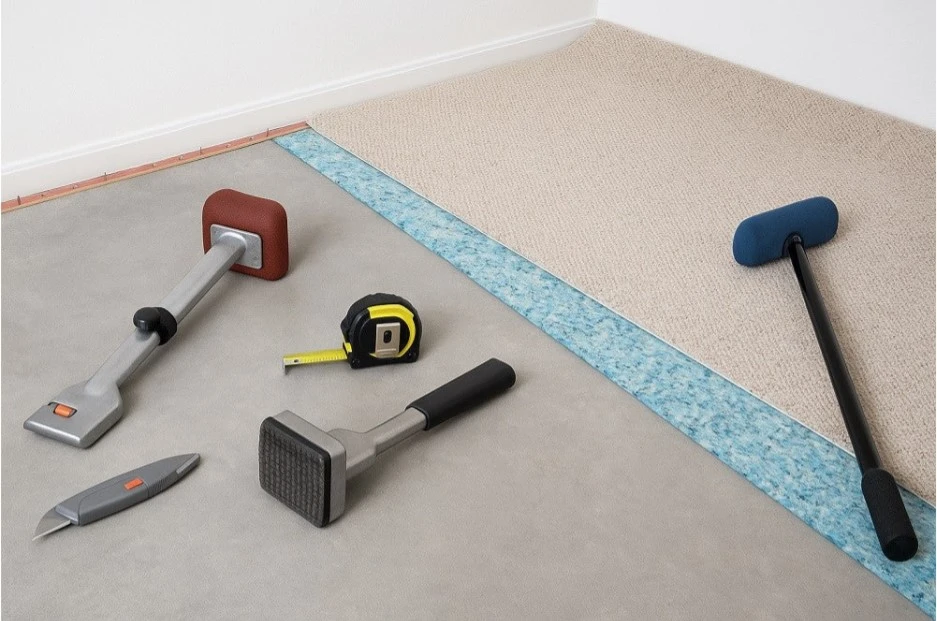
PU foam
Polyurethane foam. Cormar calls it one of the most versatile underlays and suggests it for awkward areas such as stairs and hallways. Foam underlays tend to have high tog ratings, so they keep rooms warm.
Sponge rubber
Cormar describes it as one of the best underlays for concrete floors, and the best carpet underlay for underfloor heating.
Crumb rubber
Dense and firm. Cormar recommends it under heavy furniture, because it protects the carpet from indentations.
Felt
Typically made from wool. Cormar notes that felt is cheaper and easier to lay, and that it helps stop a wool carpet flattening.
Combination
Felt bonded to crumb rubber in a single layer.
Carpet underlay tog and sound ratings
Standard carpet underlay is 8 mm to 11 mm thick, rated 2 to 3 tog and 36 dB to 45 dB for noise reduction. Low-tog underlay for underfloor heating is 5 mm to 6.1 mm thick and 0.56 to 0.75 tog. Tog measures how well underlay keeps heat in; dB measures how much noise it cuts.
| Underlay | Thickness | Tog rating | Noise reduction | Best for |
|---|---|---|---|---|
| Standard carpet underlay | 8 mm to 11 mm | 2 to 3 tog | 36 dB to 45 dB | Most rooms without underfloor heating |
| Low-tog underfloor heating underlay | 5 mm to 6.1 mm | 0.56 to 0.75 tog | About 31 dB (one product published) | Rooms with underfloor heating |
Ranges come from published product data from UK retailers and Nu-Heat.
Over underfloor heating, carpet and underlay together should not exceed 2.5 tog. Nu-Heat prefers 1.5 tog or less with a heat pump.
The carpet counts too: most nylon carpets are around 1 tog, and the thickest wool carpets exceed 2.5 tog on their own.
There is a trade-off: in published comparisons, the thickest underlay has the highest noise rating (45 dB) and thin underfloor heating underlay the lowest (31 dB). In an upstairs flat with underfloor heating, warmth and quiet have to be balanced.
How thick should carpet underlay be in each room?
Carpet underlay is usually 8 mm to 11 mm thick: the thicker end suits bedrooms and living rooms, 9 mm is the most for stairs, and 5 mm to 6 mm of low-tog underlay suits underfloor heating. As a general guide:
| Room | Typical thickness | Usual underlay | Why |
|---|---|---|---|
| Bedrooms | 10 mm to 11 mm | Thick PU foam or high-density sponge rubber | The softest feel underfoot |
| Living rooms | 10 mm to 11 mm | PU foam, or crumb rubber under heavy furniture | Warmth, and resistance to sofa dents |
| Hallways and landings | 8 mm to 10 mm | PU foam | Copes with awkward shapes and busy routes |
| Stairs | 9 mm at most | PU foam, or felt under wool carpet | Thicker underlay can become a trip hazard |
| Rooms with underfloor heating | 5 mm to 6 mm | Low-tog sponge rubber | Keeps the combined tog under 2.5 |
| Flats above other homes | Chosen by acoustic rating | High-density acoustic underlay | Cuts footstep noise to the flat below |
A thicker underlay feels softer but raises the floor: new carpet and underlay together add 10 to 15 mm of height. If a door will catch, our door easing service trims it so it opens freely. For a deeper comparison of products, read our underlay buying guide.
Acoustic underlay for London flats
For a flat above another home, choose a high-density acoustic underlay and check your lease. Part E’s sound limits apply to the whole floor when flats are built or converted, not to the underlay on its own.
Footsteps on an upstairs floor travel through the structure into the flat below as impact noise. Acoustic underlay is a high-density foam or rubber layer made to reduce that sound. Manufacturers publish a noise reduction figure in dB for each product, so compare products tested the same way. We specify the right product for your property at the survey.
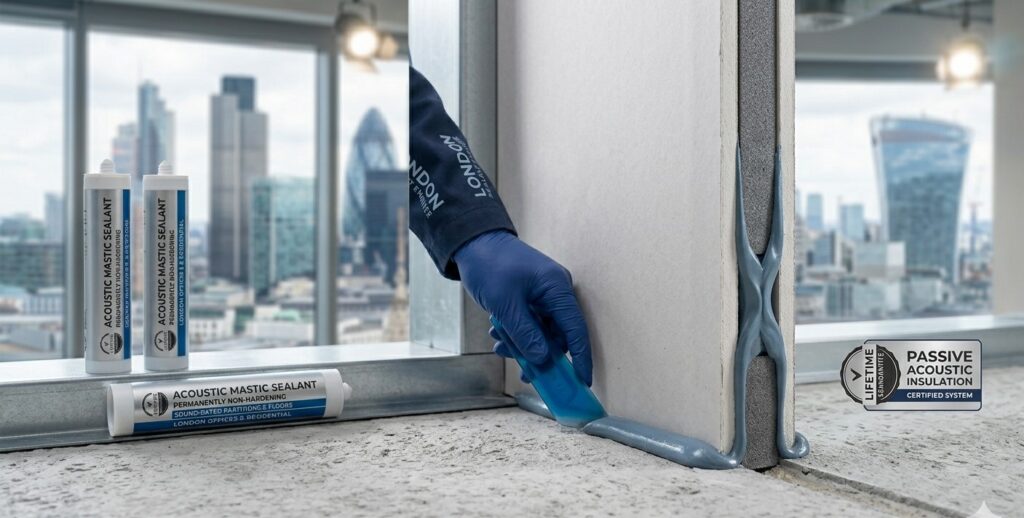
Part E and your lease
Part E of the Building Regulations (Approved Document E) sets sound insulation standards for floors between flats when they are built or converted. A purpose-built flat must keep impact sound through the floor to 62 dB or less, and a flat formed by conversion to 64 dB or less.
Those figures are measured on site for the finished floor as a whole. If you are replacing the carpet in an existing flat, check your lease and ask your managing agent what floor covering and underlay they require. For a licensed conversion or change of use, we can provide documentation for building control.
62 dB
or less: purpose-built flat
64 dB
or less: flat formed by conversion
Underlay over underfloor heating
Yes, carpet can go over underfloor heating if the carpet and underlay together stay at or below 2.5 tog, or 1.5 tog with a heat pump. That makes a thin, low-tog underlay essential.
Carpet works over electric or water-based underfloor heating. Cormar names sponge rubber as the best carpet underlay for underfloor heating, and a thinner underlay lets more heat through. Cormar also advises checking with your heating system’s manufacturer, and we check compatibility with your system before we fit anything.
2.5 tog
at most for carpet and underlay together
1.5 tog
with a heat pump

Underlay on stairs
Stairs need underlay on every tread, and usually on the risers too, no thicker than 9 mm.
- Strictly, underlay is needed only on the tread, the flat part of each step, but most fitters cover the riser as well.
- Stair underlay is cut into a section for each step, stapled to the tread and taken over the nose of the step.
- 9 mm is the usual maximum, because a thicker underlay can become a trip hazard.
- PU foam suits awkward staircases, and felt suits wool stair carpets.
For runners and fitted stair carpet, see our stair carpet and runner fitting page.
Laminate underlay fitting in London
Laminate needs a thin underlay of 1 mm to 5 mm: foam with a built-in damp-proof membrane over concrete, fibreboard over uneven timber, or acoustic underlay in flats. It must go on a subfloor that is flat to the laminate maker’s limits.
When we lay a laminate floor, the right underlay goes down first. A thick, soft layer can’t support the locking joints between laminate boards, which is why carpet underlay should never go under laminate.
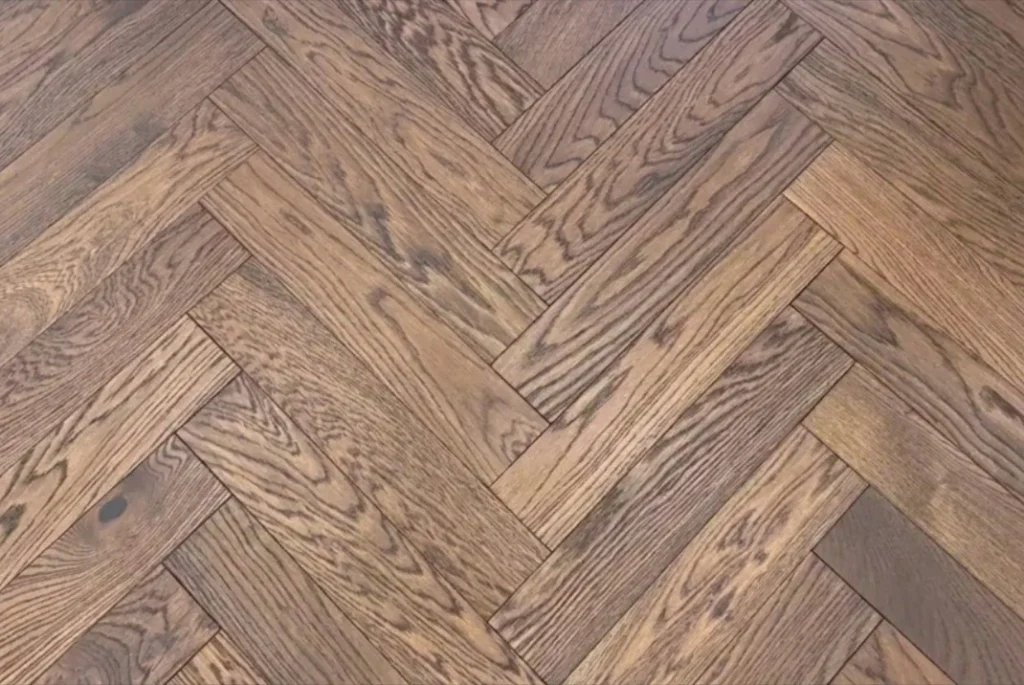
Types of laminate underlay
Foam underlay with a built-in damp-proof membrane
Light and easy to fit. The built-in moisture barrier makes it the usual choice over concrete, which needs a damp-proof layer to stop moisture warping the boards.
Fibreboard underlay
Rigid boards of compressed wood fibre with good thermal and acoustic insulation. It suits old or uneven timber floors, but it isn’t suitable for damp rooms, and over concrete it needs a separate damp-proof membrane underneath.
Acoustic laminate underlay
Rubber or a combination of materials, made to cut footstep and impact noise. It is the one to choose for laminate in an upstairs flat.
On timber floorboards, a damp-proof membrane is avoided, because it traps moisture in the boards. If you have underfloor heating, the laminate underlay must be rated for it.
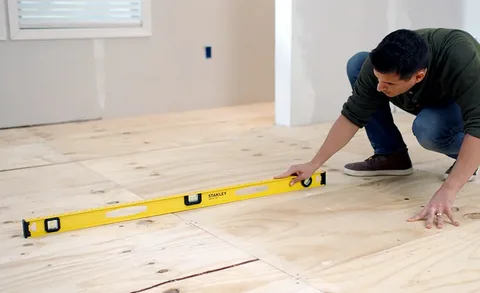
How flat the subfloor must be for laminate
Laminate makers set flatness limits, and the subfloor has to meet them before the underlay goes down. Quick-Step, for example, requires:
- Any unevenness of more than 4 mm over 2 metres to be smoothed out
- Any unevenness of more than 1 mm over 20 cm to be smoothed out
- No more than 2 mm of unevenness over 1 metre on wooden subfloors
Concrete must also be dry enough. Quick-Step requires a cement screed below 2.5% CM (75% relative humidity), or below 1.5% CM (60% relative humidity) with underfloor heating. Other brands set their own limits, so we check the instructions for your floor and level it first where it falls short. See our flooring fitting page.
Underlay for LVT and vinyl
- Click LVT: many planks have underlay built into the back and need nothing extra. Planks without it take a self-adhesive or fibreboard underlay.
- Glue-down LVT and sheet vinyl: no underlay. Glue-down LVT is stuck to the floor, and sheet vinyl has its own thick backing.
Acoustic underlay under hard floors in flats
Carpet absorbs footstep impact at the surface, while hard floors pass it into the structure. That makes the right acoustic underlay even more important under laminate or LVT upstairs. We always follow the flooring maker’s instructions.
New underlay or reuse the old one?
Fit new underlay with a new carpet in almost every case; only underlay laid in the last couple of years is usually worth keeping.
Cormar says it is crucial not to reuse old underlay, because a worn carpet usually means worn underlay that can no longer cushion footsteps. It also warns that manufacturers’ warranties may be invalidated if new underlay isn’t fitted with a new carpet.
What good underlay does for your carpet
- Makes the carpet last longer, by cushioning the impact of foot traffic
- Feels more comfortable underfoot
- Helps insulate the room
- Reduces noise
How we fit underlay
1
Free technical site survey
We measure up, check the subfloor, confirm compatibility with any underfloor heating and specify the right underlay.
2
Removal
Your old floor covering is lifted and taken away, quoted separately.
3
Subfloor preparation
Any preparation the floor needs is done first, on a separate visit if necessary.
4
Gripper rods
Gripper goes around the edge of the room, set just off the skirting, but not across doorways, where threshold bars finish the edge.
5
Underlay
The underlay is laid rubber side down and cut level with the gripper. Joins are butted together and taped, never overlapped, so no ridge shows through the carpet.
6
Carpet
The carpet is fitted over the underlay and stretched onto the gripper, following BS 5325.
7
Handover
We clear up, and if rippling or a seam failure is caused by our workmanship, we come back and fix it at no extra cost.
Underlay fitting prices in London
Acoustic underlay adds £2 to £5 per m², fitting only costs £3 to £6 per m², and a standard bedroom with carpet fitting and basic underlay is typically £150 to £300. You get a fixed, written quote after the survey. These are our published starting prices:
Acoustic underlay
£2 to £5 per m²
Added to a carpet fitting job
A standard bedroom of 12 to 15 m²
£150 to £300
Typically, all-in, including carpet fitting and basic underlay
Fitting only, with your own carpet and underlay
£3 to £6 per m²
Subfloor preparation
£4 to £8 per m²
Removal and disposal of your old floor covering
Quoted after the survey
The final price depends on the room size and layout, stairs, the underlay chosen, the condition of the subfloor, grippers, door bars and removal of the old floor. See all our carpet fitting prices.
Underlay fitting across London
We fit underlay across Greater London from Lodge Avenue in Dagenham, and East London jobs can often be booked the same week.
East London
Dagenham, Barking, Ilford, Romford, Hornchurch, Upminster, Rainham, Stratford and East Ham
Central London, the City and the rest of Greater London
Why London homeowners choose UTK
- Rated 5.0 from 27 Google reviews: read them on our Google Business Profile
- Workmanship guarantee: if rippling or a seam failure is caused by our fitting, we return and fix it at no extra cost
- Fitted to BS 5325, the British Standard code of practice for installing textile floor coverings
- Price match against a written quote from another professional installer
- A free technical site survey and a fixed, written quote before any work starts
What our customers say:
“Excellent laminate and carpet fitting service.”
Fawad Ahmad, Real Estate Agent
Underlay fitting FAQs
How much does underlay fitting cost in London?
Acoustic underlay adds £2 to £5 per m² to a carpet fitting job. A standard bedroom of 12 to 15 m² is typically £150 to £300 all-in, including carpet fitting and basic underlay. You get a fixed, written quote after the free survey.
Do I need new underlay with a new carpet?
In almost every case, yes. Old underlay is usually as worn as the old carpet, and Cormar warns that warranties may be invalidated if new underlay isn’t fitted with a new carpet. Underlay laid within the last couple of years may be fine to keep.
Which underlay is best for a flat?
A high-density acoustic underlay, to reduce footstep noise reaching the flat below. Check your lease first, because it may set a minimum standard.
Will acoustic underlay make my flat meet Part E?
Not on its own. Part E’s figures are measured on site for the whole floor, so the underlay is one part of the result. For a licensed conversion or change of use, we can provide documentation for building control.
What underlay should I use with underfloor heating?
One that keeps the combined tog of carpet and underlay at 2.5 tog or below. Cormar names sponge rubber as the best carpet underlay for underfloor heating. Check with your heating system’s manufacturer too.
How thick should carpet underlay be?
Carpet underlay is usually 8 mm to 11 mm thick. On stairs, 9 mm is the usual maximum, because a thicker one can become a trip hazard.
Do stairs need underlay?
Yes. Underlay is essential on the treads, which take the foot traffic, and most fitters cover the risers too.
Can I put carpet underlay under laminate?
No. Carpet underlay is far too thick to support laminate’s locking joints. Laminate needs its own thin underlay, usually 1 mm to 5 mm depending on the type.
What is the best underlay for laminate on a concrete floor?
One with a damp-proof membrane, such as foam underlay with a built-in moisture barrier. Concrete needs a damp-proof layer to stop moisture warping the boards, and fibreboard used over concrete needs a separate membrane beneath it.
How flat does a floor need to be for laminate?
It depends on the laminate maker. Quick-Step, for example, requires any unevenness of more than 4 mm over 2 metres, or more than 1 mm over 20 cm, to be smoothed out before fitting.
Does LVT need underlay?
It depends on the LVT. Many click LVT planks have underlay built in, glue-down LVT is stuck to the floor and needs none, and click planks without a backing take a self-adhesive or fibreboard underlay.
Will new underlay stop my doors closing?
It might. New carpet and underlay add 10 to 15 mm to the floor. If a door will catch, our door easing service trims it so it opens freely.
How long does underlay fitting take?
Underlay goes down as part of the carpet job. A standard bedroom or living room of 12 to 20 m² usually takes 2 to 4 hours, and a whole flat or house is usually done in one day.
Do you remove the old carpet and underlay?
Removal and disposal of your old floor covering is quoted separately, after the free survey.
Book your free underlay survey
Tell us the rooms, the rough floor area and whether there is underfloor heating or a lease to check. We will arrange a free technical site survey and send a fixed, written quote, with no obligation.
- UTK CARPET AND FLOORING Ltd
- 442A Lodge Avenue, Dagenham
- 07578 196079
- info@utkcarpetsandflooringltd.com
- Find us on Google